Skip to the main content
Tricks of Ear and EyeHow reality gets edited on the way in.

Perception science you can check with your own eyes and ears

How reality gets edited on the way in.

Look at stimulus drawings, listen to short synthesized sounds and compare sensory data with what experiments on people and animals found. Every figure and sound comes with the parameters behind it.

Start with these entries

Illustration: a listener's silhouette beside an empty road as a featureless horizontal blur passes in the distance Illustration

Audio demo · five synthesized passes

The Doppler Effect, Heard at Five Speeds

Doppler Effect: Listeners Report a Rise the Frequency Lacks

Sound

Five synthesized passes, 20 to 300 km/h: at a steady speed in a straight line, the frequency only falls. Listeners in a 1996 study still reported a rise.

Image credit

Illustration: Tricks of Ear and Eye. Generated schematic image — not a photograph, specimen record or perceptual simulation. Reuse permitted with this credit line; provided as is.
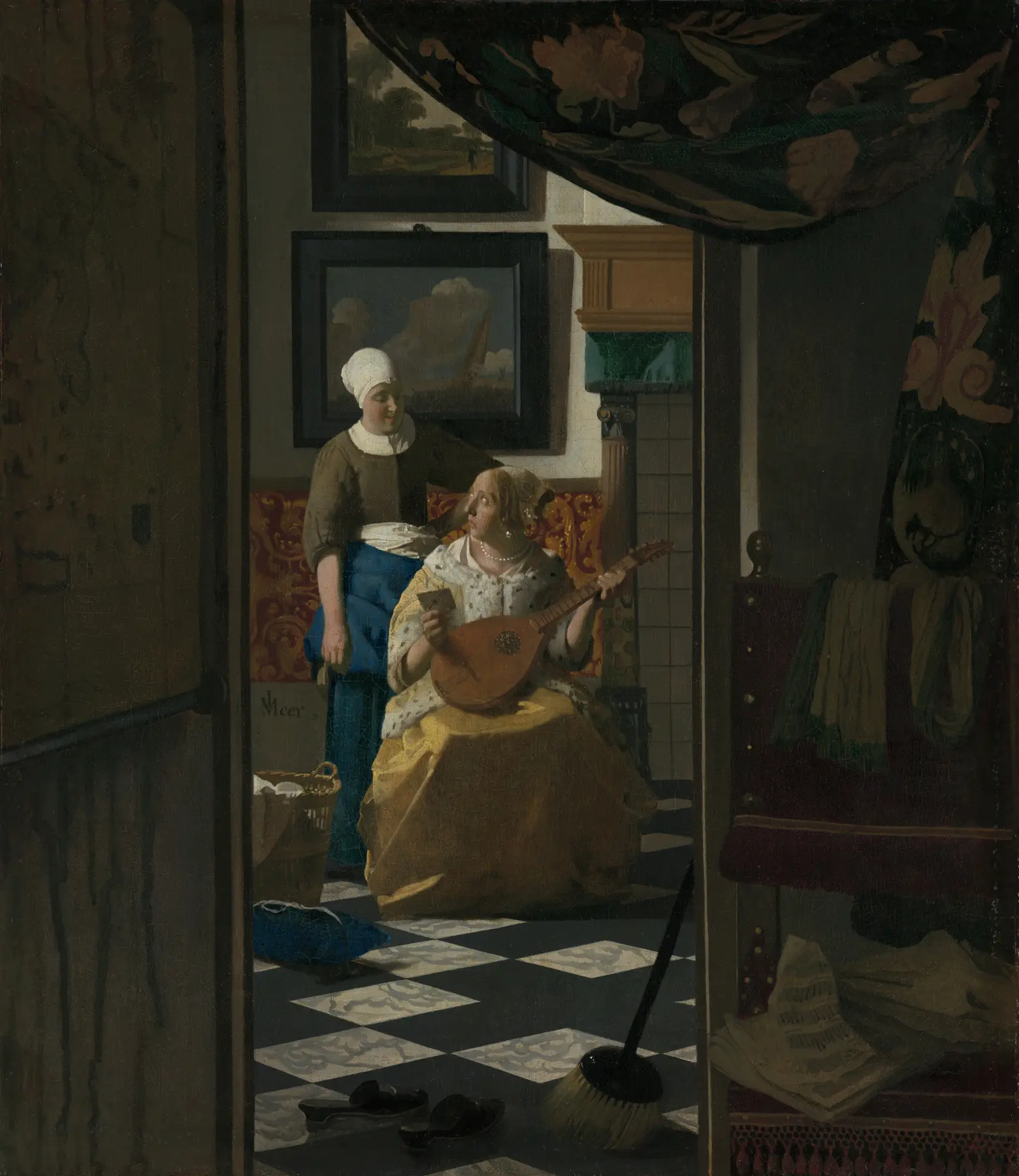

Vermeer's The Love Letter: a seated woman holds a letter, a maid beside her, seen through a doorway over a tiled floor

Flagship · Illusions

Checker-Shadow Illusion: Two Squares, One Gray Value

Illusions

Squares 1 and 2 in this checker-shadow figure, drawn here from the principle, store the same gray level. Four competing accounts of why one can look lighter.

Image credit

"The Love Letter" by Johannes Vermeer — https://commons.wikimedia.org/wiki/File:The_Love_Letter_-_Johannes_Vermeer.png — Public domain (Johannes Vermeer died 1675; public domain in the US (published before 1931) and in the EU (author died more than 70 years ago); PD-Art faithful reproduction by the Rijksmuseum, Amsterdam (SK-A-1595))

Oil painting of the Virgin Mary in prayer by Sassoferrato, 1640 to 1650

Flagship · Color & Pigment

Ultramarine Blue: Its Color Comes Mostly From Caged Sulfur

Color & Pigment

Ultramarine's blue comes mainly from three sulfur atoms trapped in a mineral cage. How lapis lazuli fits in, and what 1828 reports say of the synthetic.

Image credit

"The Virgin in Prayer" by Giovanni Battista Salvi da Sassoferrato — https://commons.wikimedia.org/wiki/File:Sassoferrato_-_Jungfrun_i_b%C3%B6n.jpg — Public domain (Giovanni Battista Salvi da Sassoferrato died 1685; public domain in the US (published before 1931) and in the EU (author died more than 70 years ago); PD-Art faithful reproduction (photograph from the Web Gallery of Art; National Gallery, London, NG200, as recorded on the Commons file page))

A slender mantis shrimp, Austrosquilla osculans

Flagship · Animal Senses

Mantis Shrimp Eyes: A Tested Species Told Hues Apart Poorly

Animal Senses

Some mantis shrimp have 12 kinds of color receptor, yet in tests they needed wavelengths 15–25 nm apart to tell them apart. Humans manage 1–8 nm.

Image credit

"Slender Mantis Shrimp (Austrosquilla osculans)" by Christopher Mark — https://commons.wikimedia.org/wiki/File:Austrosquilla_osculans_61399682.jpg — CC BY 4.0 (https://creativecommons.org/licenses/by/4.0/)

Latest entries

Illustration: a person seen from behind faces the inside corner of an empty room, its edges softly blurred Illustration

Müller-Lyer Illusion: Nine Newly Sighted Children Saw It Too

Illusions

Equal lines, one usually judged longer: nine children responded to the Müller-Lyer illusion within 48 hours of gaining sight, as did blind people by touch.

Image credit

Illustration: Tricks of Ear and Eye. Generated schematic image — not a photograph, specimen record or perceptual simulation. Reuse permitted with this credit line; provided as is.

Illustration: a listener's silhouette beside an empty road as a featureless horizontal blur passes in the distance Illustration

Doppler Effect: Listeners Report a Rise the Frequency Lacks

Sound

Five synthesized passes, 20 to 300 km/h: at a steady speed in a straight line, the frequency only falls. Listeners in a 1996 study still reported a rise.

Image credit

Illustration: Tricks of Ear and Eye. Generated schematic image — not a photograph, specimen record or perceptual simulation. Reuse permitted with this credit line; provided as is.

Keyboard of Bartolomeo Cristofori's 1720 grand piano in the Metropolitan Museum of Art

Grand Piano Hammer: Normally, It Strikes in Free Flight

Instruments

In a grand piano action, the jack lets go of the hammer just before the strike. Measurements on a grand show the hammer covering the last stretch on its own.

Image credit

"Grand Piano, Bartolomeo Cristofori, Florence, 1720 (Metropolitan Museum of Art 89.4.1219)" by The Metropolitan Museum of Art — https://commons.wikimedia.org/wiki/File:Grand_Piano_MET_DP300910.jpg — CC0 1.0 (https://creativecommons.org/publicdomain/zero/1.0/)

Vermeer's The Love Letter: a seated woman holds a letter, a maid beside her, seen through a doorway over a tiled floor

Checker-Shadow Illusion: Two Squares, One Gray Value

Illusions

Squares 1 and 2 in this checker-shadow figure, drawn here from the principle, store the same gray level. Four competing accounts of why one can look lighter.

Image credit

"The Love Letter" by Johannes Vermeer — https://commons.wikimedia.org/wiki/File:The_Love_Letter_-_Johannes_Vermeer.png — Public domain (Johannes Vermeer died 1675; public domain in the US (published before 1931) and in the EU (author died more than 70 years ago); PD-Art faithful reproduction by the Rijksmuseum, Amsterdam (SK-A-1595))

Oil painting of the Virgin Mary in prayer by Sassoferrato, 1640 to 1650

Ultramarine Blue: Its Color Comes Mostly From Caged Sulfur

Color & Pigment

Ultramarine's blue comes mainly from three sulfur atoms trapped in a mineral cage. How lapis lazuli fits in, and what 1828 reports say of the synthetic.

Image credit

"The Virgin in Prayer" by Giovanni Battista Salvi da Sassoferrato — https://commons.wikimedia.org/wiki/File:Sassoferrato_-_Jungfrun_i_b%C3%B6n.jpg — Public domain (Giovanni Battista Salvi da Sassoferrato died 1685; public domain in the US (published before 1931) and in the EU (author died more than 70 years ago); PD-Art faithful reproduction (photograph from the Web Gallery of Art; National Gallery, London, NG200, as recorded on the Commons file page))

A slender mantis shrimp, Austrosquilla osculans

Mantis Shrimp Eyes: A Tested Species Told Hues Apart Poorly

Animal Senses

Some mantis shrimp have 12 kinds of color receptor, yet in tests they needed wavelengths 15–25 nm apart to tell them apart. Humans manage 1–8 nm.

Image credit

"Slender Mantis Shrimp (Austrosquilla osculans)" by Christopher Mark — https://commons.wikimedia.org/wiki/File:Austrosquilla_osculans_61399682.jpg — CC BY 4.0 (https://creativecommons.org/licenses/by/4.0/)

Illustration: a listener seen from behind, a few steps from a blue-and-white striped barber pole Illustration

Shepard Tone: 12 Steps Up, and the Same Sound Comes Back

Sound

Clip 1 lifts each component of a Shepard tone a semitone 12 times, and tone 13 matches tone 1. Listeners in experiments tended to report the shorter way around.

Image credit

Illustration: Tricks of Ear and Eye. Generated schematic image — not a photograph, specimen record or perceptual simulation. Reuse permitted with this credit line; provided as is.
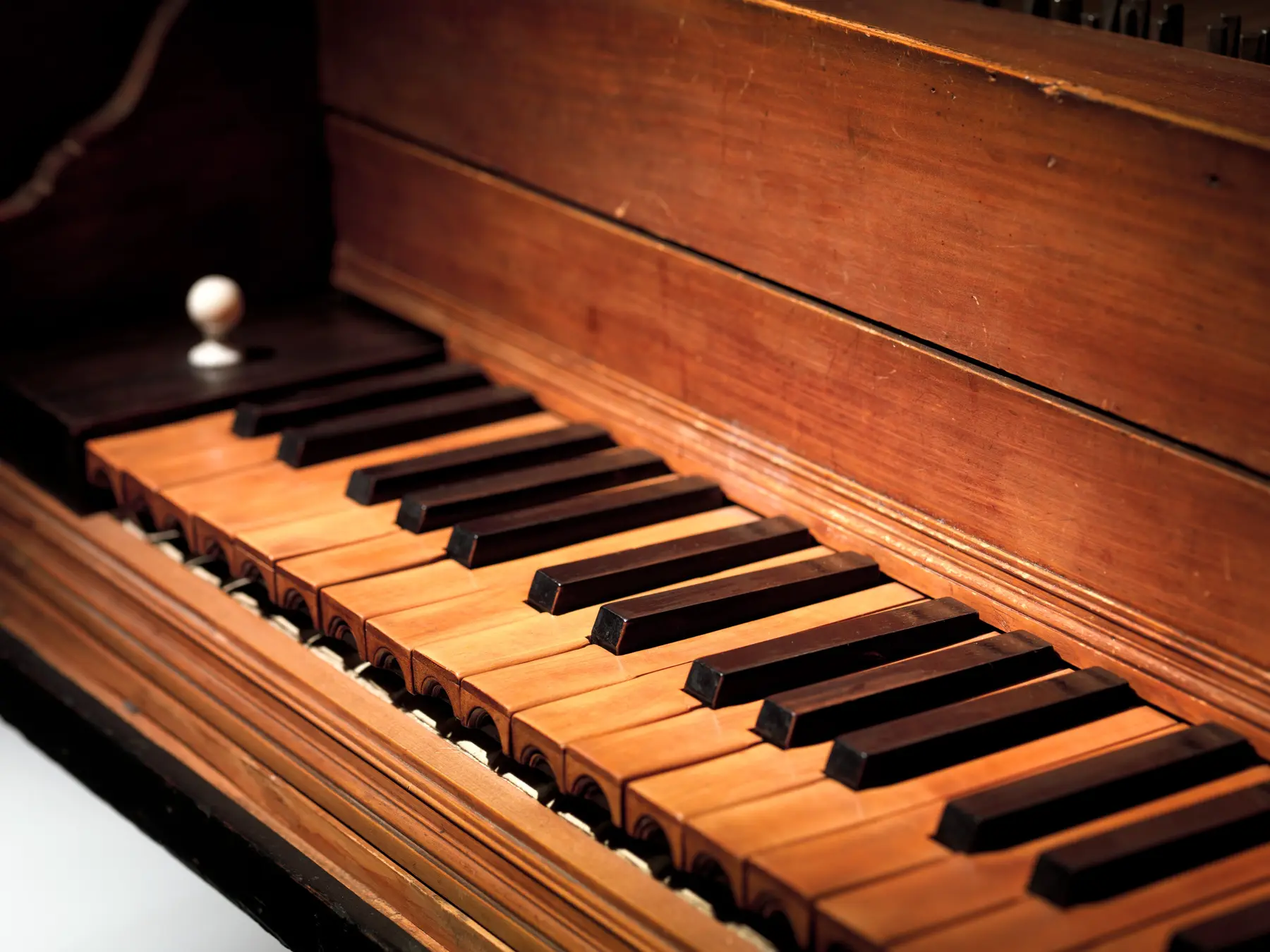
Illustration: a seated silhouette holding a string instrument, its neck far out of focus Illustration

Guitar Fret Spacing: Each Gap Is About 5.6% Narrower

Instruments

Fret positions for a 648 mm string: each gap is about 5.61% narrower than the last, and dividing by 18 leaves fret 12 of an ideal string about 12.5 cents flat.

Image credit

Illustration: Tricks of Ear and Eye. Generated schematic image — not a photograph, specimen record or perceptual simulation. Reuse permitted with this credit line; provided as is.
Prussian blue pigment powder

Prussian Blue: The Accident Story Rests on a 1731 Account

Color & Pigment

Prussian blue was announced in Berlin in 1710 and a recipe printed in 1724. The tale of a red that turned blue comes from Stahl's 1731 book, as Kraft traces it.

Image credit

"Pigment Berliner Blau" by Saalebaer — https://commons.wikimedia.org/wiki/File:Pigment_Berliner_Blau.JPG — CC0 1.0 (https://creativecommons.org/publicdomain/zero/1.0/)

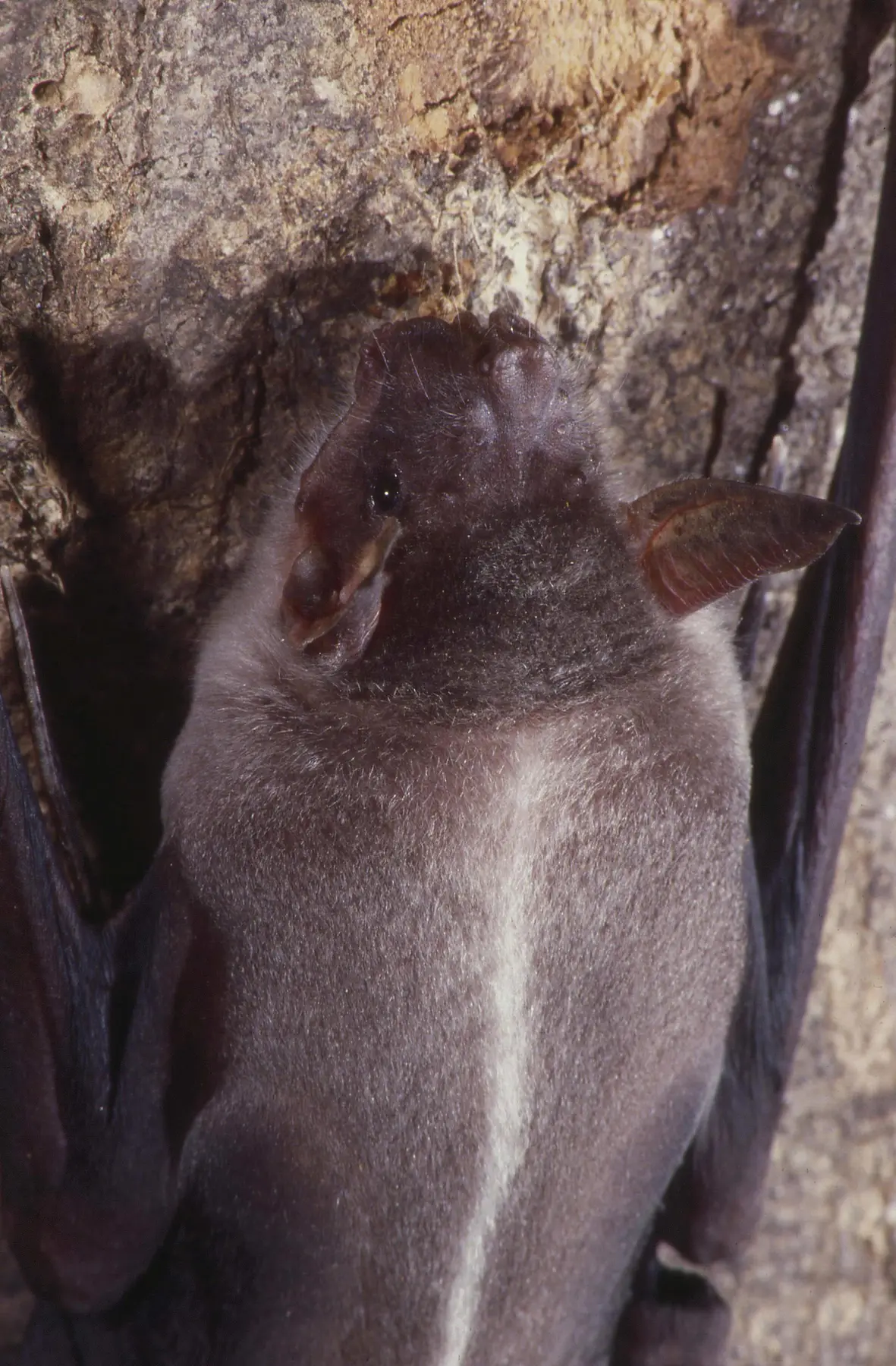
A greater bulldog bat, Noctilio leporinus, an adult kept in captivity

Bat Echolocation: In a Study, Search Calls Peaked at 25+ kHz

Animal Senses

In field recordings of 11 bat species in Panama, the strongest call frequency was above 20 kHz in every one. How loud the calls were, and how echoes give range.

Image credit

"Greater Bulldog Bat, Noctilio leporinus" by Susan Ellis, Bugwood.org — https://commons.wikimedia.org/wiki/File:Captive_Noctilio_leporinus.jpg — CC BY 3.0 (https://creativecommons.org/licenses/by/3.0/us/)

Illustration: a viewer seen from behind stands before a blank, softly shaded panel on a wall Illustration

Kanizsa Triangle: In Scans, Activity Rose on Missing Edges

Illusions

Three notched disks, no lines. In a 1984 abstract, monkey area 18 cells responded to illusory contours; 2021 fMRI of 16 adults found activity rising along them.

Image credit

Illustration: Tricks of Ear and Eye. Generated schematic image — not a photograph, specimen record or perceptual simulation. Reuse permitted with this credit line; provided as is.

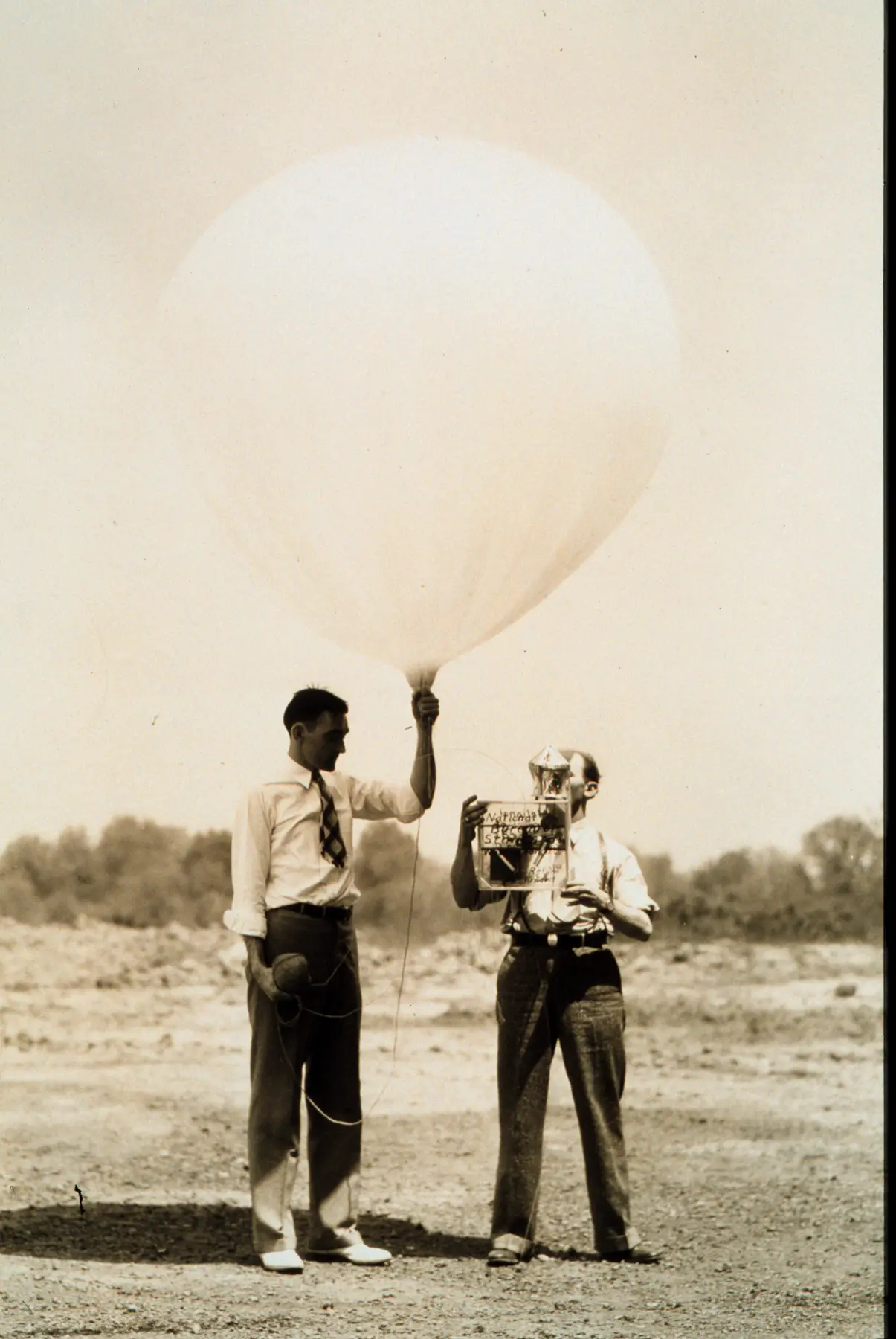
1936 photograph: two men prepare an early radiosonde, one holding up a large balloon, the other an instrument box

Why Helium Changes Your Voice: Its Resonances Rise

Sound

In heliox, a voice's source frequency barely shifts while its resonances rise. Two synthetic clips share a 120 Hz source; one has resonances 1.85 times higher.

Image credit

"Early launch of radiosonde, Washington, D.C., 1936" by NOAA Photo Library — https://commons.wikimedia.org/wiki/File:Wea01108_-_Flickr_-_NOAA_Photo_Library.jpg — CC BY 2.0 (https://creativecommons.org/licenses/by/2.0/)

Try it now

This week's check,

Work out 343 ÷ (4 × 0.17), the lowest resonance in hertz of a 17-centimeter tube closed at one end, then compare it with F1 in the air row of the table above.

From Why Helium Changes Your Voice: Its Resonances Rise (Sound)

Five categories