Skip to the main content
Tricks of Ear and EyeHow reality gets edited on the way in.

Category

Instruments

How instruments make sound: mechanisms, materials and physics, with construction diagrams checked against coordinates. No tone-quality verdicts or buying advice.

3 entries so far

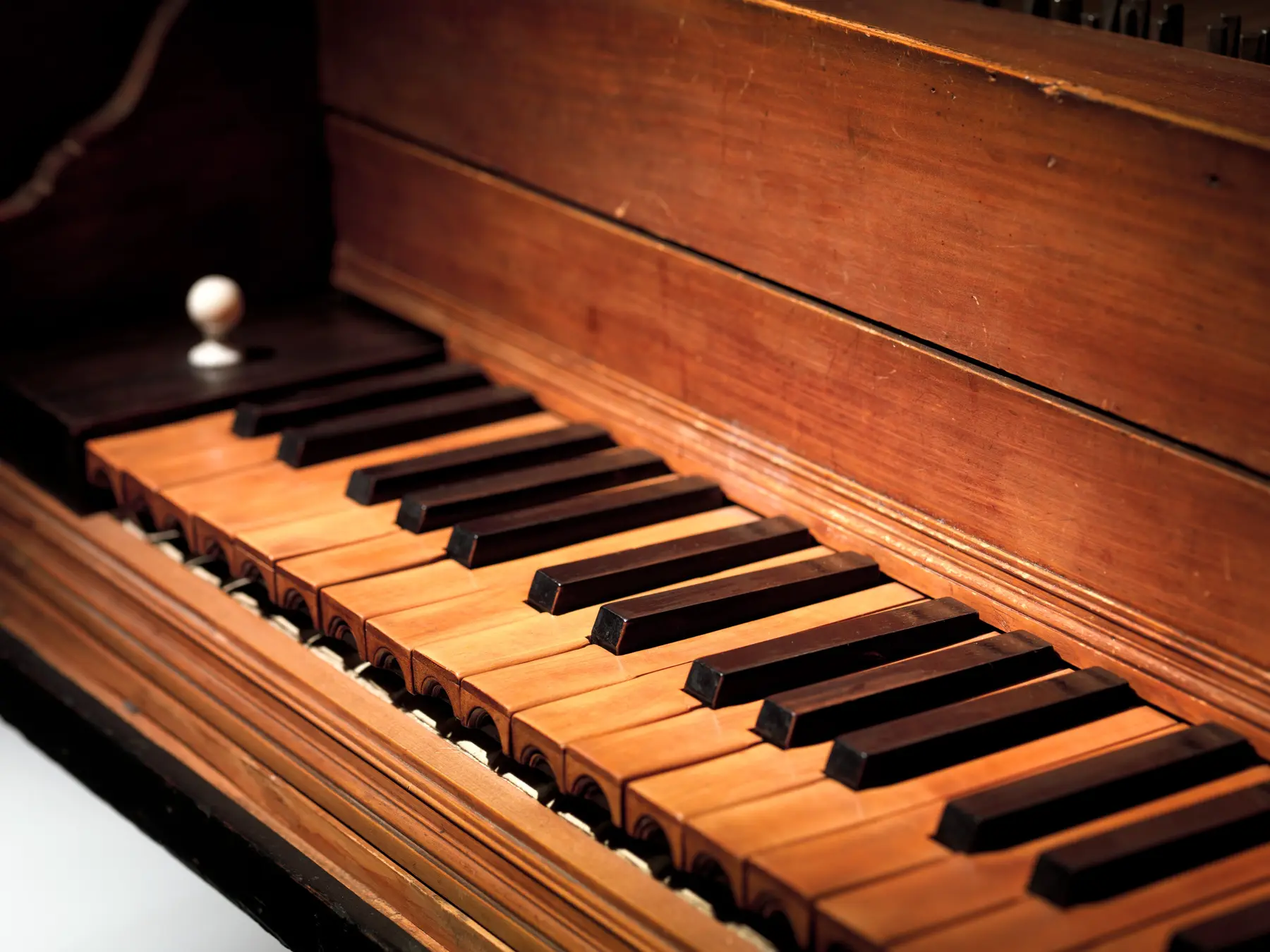
Keyboard of Bartolomeo Cristofori's 1720 grand piano in the Metropolitan Museum of Art

Grand Piano Hammer: Normally, It Strikes in Free Flight

Instruments

In a grand piano action, the jack lets go of the hammer just before the strike. Measurements on a grand show the hammer covering the last stretch on its own.

Image credit

"Grand Piano, Bartolomeo Cristofori, Florence, 1720 (Metropolitan Museum of Art 89.4.1219)" by The Metropolitan Museum of Art — https://commons.wikimedia.org/wiki/File:Grand_Piano_MET_DP300910.jpg — CC0 1.0 (https://creativecommons.org/publicdomain/zero/1.0/)

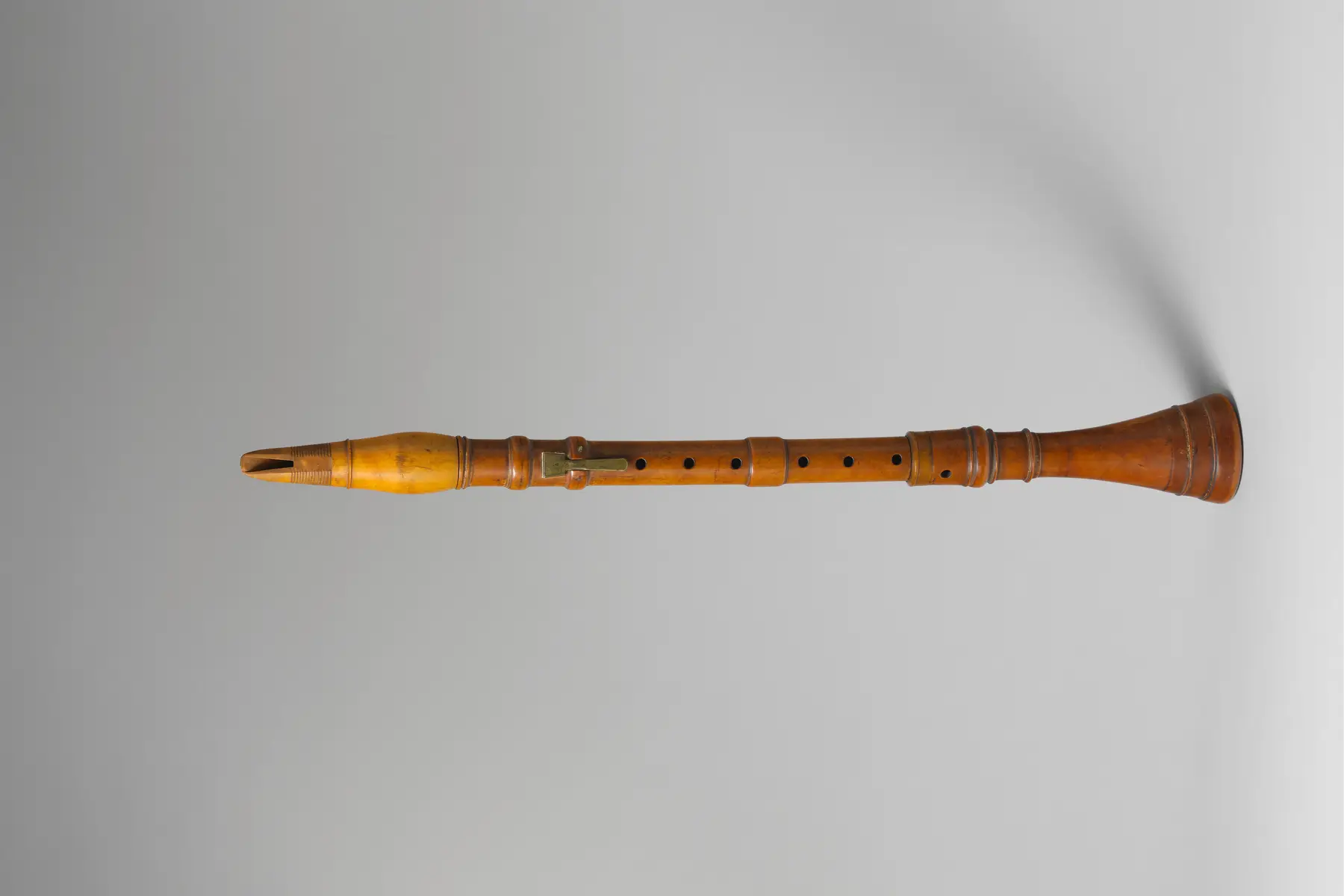
Illustration: a seated silhouette holding a string instrument, its neck far out of focus Illustration

Guitar Fret Spacing: Each Gap Is About 5.6% Narrower

Instruments

Fret positions for a 648 mm string: each gap is about 5.61% narrower than the last, and dividing by 18 leaves fret 12 of an ideal string about 12.5 cents flat.

Image credit

Illustration: Tricks of Ear and Eye. Generated schematic image — not a photograph, specimen record or perceptual simulation. Reuse permitted with this credit line; provided as is.

A boxwood and brass clarinet in D

How a Clarinet Works: A Closed Tube Skips the Octave

Instruments

A tube closed at one end resonates at 1, 3 and 5 times its lowest frequency. A clarinet is close to one, so its next register is about a twelfth up.

Image credit

"Clarinet in D" by The Metropolitan Museum of Art — https://commons.wikimedia.org/wiki/File:Clarinet_in_D_MET_DP232753.jpg — CC0 1.0 (https://creativecommons.org/publicdomain/zero/1.0/); modified: rotated 90° counterclockwise and cropped to 3:2; colours not altered